René Gabriel
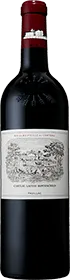
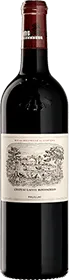
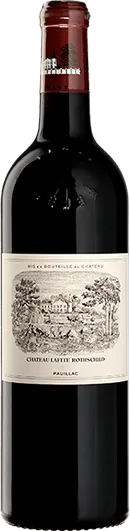
May a Bordeaux show similarities to a Californian? Among the greatest wines of the 1986 vintage, a recurring eucalyptus-scented Cabernet note was often observed. Arrival (19/20): Sensational, dense nose, rich, multi-layered. Currant and Port wine concentrate. Delicious extract, a fine wine with power and huge potential. In 1994 a gentle monument: compressed tannins, perhaps also somewhat difficult to understand. Its true greatness will only be revealed in the next millennium. In 1996 I was startled, because the bouquet was warm and initially showed gentle oxidative tones, which, curiously, were replaced after half an hour by plummy sweetness, hay notes, dried herbs. Dry palate, rather sandy and for the moment not bringing out the finesse of a Lafite, raisins and a hint of Málaga on the finish, still needs quite a bit of time. Two years later, again totally closed with a gently herbal bouquet, but behind it a concentrated load of raisins and sweet terroir. On the palate also compressed, lots of astringency, yet not quite as unapproachable as other ’86 Premiers. Decant one hour. 99: Drunk at dinner with Marino Aliprandi. Jürgen Steinbrecher had brought the bottle from his private cellar: The bouquet seems almost overripe and resembles the already faded Lafite 1976 and 1979. On the palate the wine is still hard, almost compressed and needs plenty of air. Somehow it seems to be coming apart at the moment. One has the feeling that a half-hour decant would do it good, as it takes on fatty contours and lets the grainy tannins melt a little. 03: I’m becoming unsure. The bouquet shows oxidative traces, the fruit is sinking and the wine itself still has tannins and an unfinished acid configuration for another twenty years which it should still digest. It likely will never again be uncompromisingly great. A wine for tannin fetishists. The guarantee period has expired. I would rather sell it and buy more ’89s (17/20). At a lunch at château Clauzet with Maurice Velge, two bottles were opened and both decanters set out. One bottle was stinky, woody but not corked. The other showed a great, perfumed Cabernet-herb bouquet and, on the nose alone, would have rated at least a 19/20 experience. On the palate still showing hard, demanding and only slowly developing tannins. Will it ever be ripe? Somehow even decanting doesn’t help much; it tends to dry out… (17/20). 06: Dark, deep garnet, ruby and brick rim. Crazy bouquet: thyme, verbena, fir beard, wild rosemary, flowering capers; underneath still plenty of smoky cassis; on the palate juicy, delicate, again showing a wild, nuanced herbal tone, supportive, finely grained tannins; at the core a dramatic sweetness; still tannic but well on its way to becoming a slightly lighter version of the 1945 Mouton. After a few disappointments, once again an almost perfect bottle! 07: In Holland: Dark, deep orange-brown rim. Showing enormous depth on the nose, the wine initially displays a profound, cold-smoky Cabernet note, lots of herbs and black berries, as well as Nicaragua tobacco. On the palate firm, still strongly astringent and showing in its tannin muscles capsule notes; the tannin-acid bond may slightly dominate the flesh and fat; thus, in this still polarizing wine, greatness and hardness pair up. It gained slightly with air, but then (still?) didn’t want to catch up with the very greatest. Recommendation: decant 6 hours. At times the nose was 20/20, overall impression: 19/20. 07: Coburg tasting. Very dark, almost black reflections in the middle. Restrained, defensive bouquet, earthy, dry, somewhat dull at the outset, iodine notes; opens only slowly and doesn’t really want to communicate. On the palate firm, still astringent, meaty, enormous concentration but also a certain arrogance in the tannins, very dry, grainy and somehow— for a Premier Cru—very uncharming. But that is also familiar from other Premier Crus of this vintage. This one, however, seems completely undeveloped and still needs a good 10 years of bottle age to reach first maturity. Recently tasted bottles vary, but the potential is always the same! If you drink it, decant for 8 hours and you’re taking no risk. 08: Yet another corked bottle at the Best-Bottle tasting! 11: For a lunch at Tobler Werni’s with Baschi Schwander I brought a half-bottle. The color was sensationally young. And so was the wine. Almost still mute with its compact, closed style. Still a huge tannin package. (20/20). 11: Magnum. Quite dark wine-red, practically no color evolution. Complex sweet bouquet, lots of black plums, also red cherries, then cassis notes, licorice, a bit of tar and lemon thyme, half-opened, but you can tell that—perhaps only in 10 years—there will be more, maybe much more. Compact palate, still a lot of tannic acidity, also quite a bit of astringency; thus this monumental ’86 Lafite is still very upfront and far from its first drinking window. (20/20). 12: I would gladly have awarded the 1986 Lafite-Rothschild the maximum score. In terms of potential that would have been no problem, but unfortunately in the generous truffle shimmer there was a slightly dull, earthy note. Let’s look at this again in 20 years, when it might be ripe. The tannin masses are in any case still huge. Potential rating: 19/20. 13: 1986 Château Lafite-Rothschild: Extremely dark, dense purple, black reflections. In the deep-probing nose: smoke, currants, dried foliage, fine woods; compact and somehow balling its fist nasally; finest herbal nuances and fermented tea leaves; delicate iodine and peat notes, thus announcing the first tertiary phase. Rich, meaty palate, flow still somewhat blocked by sandy, semi-arrogant tannins, which, from the tongue, connect with the rest of the mouth in a comprehensive astringency; little charm but still incredible potential. Not yet in its first maturity but—at least with this bottle—showing a desire to belong one day to tannin-rich role models like 1928 and 1945. A moving yet laborious sip. In a way it is the opposite of a Lafite, because the wine comes across like a rich farmer in a brocade waistcoat. (20/20). A sensational half-bottle, decant three hours and leave in a cool cellar. The tannins are now finer and, with longer air exposure, bring the classic, beautiful Lafite sweetness. A legend is clearly growing here. (20/20). 15: An absolutely young bottle at a blind tasting in Zug. I spotted it quickly. It is unique. But unfortunately still too young. (20/20). 15: A half-bottle at our place a few days later. Somewhat riper, but still not ripe. (20/20). 15: Half-bottle. Incredibly dark, still showing black and, by nuances, violet reflections in the middle. I had it a few days earlier from a standard bottle and it was even more closed. Here at least there was a tiny chance of hitting part of the possible wine. The nose: a parade of dried and freshly chopped kitchen herbs, also mint and hay, currants, tar. The indicated depth recalls a Hermitage. On the palate showing an addition of incredibly many still half-raw tannins; this results in massive astringency. This is a monumental chunk and the opposite of a Lafite. For—in great vintages—this is usually one of the finest Crus in the entire Médoc. But here the tannic and still demanding vintage was obviously much stronger. (19/20). 16: Magnum. Very, very dark color, only few maturity reflections. A dream bouquet, first restrained, then building; first with incredibly seductive, almost playful herbal tones; then with remnants of cassis, prunes, and subsequently with more and more malty sweetness. One could smell it for hours. Particularly fascinating is that it constantly offers more, inviting the observer to a contemplative conversation. On the palate not a monument, somehow documenting a certain lightness; thus the 1986 tannins come a bit to the fore. But it is also quite clear that these are much better integrated than a few years ago. The finish again with black berries, currants, tar and plenty of licorice. Young, young, young! In 50 years you can still expect a huge Lafite. A legend, but perhaps an atypical Lafite, for until now the greatest wines of this feminine Pauillac Premier have always come from warm years. This magnum: 20/20! 21: Magnum. In a blind tasting in Oberägeri it stood right next to the Mouton. The latter was fussy and “dumpy.” But the Lafite was outstanding. Dark in color. The nose an excess of wild Cabernet and herbal tones, at the very back minimal cassis remnants. On the palate powerful, demanding and presenting itself like a Pauillac monument. It deeply impressed me. I guarantee a drinking window for another 50 years. Legendary and mega-classic!!! (20/20). 22: Unfortunately: The color is still extremely young! In the very dark, dense red one still sees violet reflections. The nose was not very edifying at the beginning. Some at the table complained of “cork taint.” I’ve known this wine for a long time. Unfortunately many are contaminated. That is to say, faulty. More precisely: “TCA fault”—I’ve often written about it and it’s not only the Lafite in the 1986 vintage. I took the glass, covered the opening with my hand and shook the wine vigorously. Then I waited a few minutes before the next nose contact. A tendency to improve became evident. Lots of Bakelite, tar, carbon oil and other aromas pointing toward “strong reduction.” Behind all these not very desirable impressions, there was also fairly preserved black-berried fruit. On the palate there was definitely no regular cork fault, because it did not turn bitter in the back of the throat. Massive, extremely meaty body with a far-reaching, monumental astringency. Basically a 20-point wine, but unfortunately…






 Guaranteed provenanceDirect from the estates
 DeliveryFree standard delivery over HK$5,000
 Secure PaymentVisa, American Express, Mastercard...