What is Puligny-Montrachet?
A village nestled on the Côte de Beaune produces some of the most sought-after white wines in the world. Puligny-Montrachet does not cultivate excess: its temperate slopes, its clay-limestone marls and its cool skies shape a Chardonnay of remarkable precision.
What is Puligny-Montrachet?
Chardonnay in majesty: the foundations of an exceptional appellation
Granted appellation d'origine contrôlée status in 1937, Puligny-Montrachet refers both to a village in the Côte-d'Or and to one of the most prestigious white wines. The vineyard extends over approximately 210 hectares, divided between village and premier cru appellations, to which the areas classified as grand cru must be added. Plantings are almost exclusively devoted to Chardonnay, which finds here one of its most accomplished expressions. Pinot Noir, far less represented, gives rise to a few rare reds.
From Mont Rachaz to Puligny: the story behind the name
The name itself tells a story of terroir. "Montrachet" is said to come from the alteration of "Mont Rachaz", the hill overlooking the vineyard. The village added this prestigious name to its own in 1879, a telling gesture from an appellation that has always known how to make its place its signature. Puligny-Montrachet embodies that Burgundian philosophy in which the terroir dictates everything: soil, exposure and altitude are the founding pillars.
An exceptional terroir
Where is the Puligny-Montrachet vineyard located in Burgundy?
Puligny-Montrachet unfolds along the Côte de Beaune, some fifteen kilometres south of Beaune, between Meursault to the north, Chassagne-Montrachet to the south and Saint-Aubin to the west.
The Côte forms a straight north-east/south-west relief, separating the limestone plateaus of the Hautes-Côtes from the Bresse plain. Along this drop of about 200 metres, the alternation of limestone and marl banks generates a great diversity of soils. Puligny-Montrachet stands at the hinge between the stony lands of Meursault and the more clayey soils of Chassagne, a dual influence that its wines faithfully reflect.
Marls, altitude and freshness: the pillars of a terroir of precision
The vineyard occupies the western half of the commune, on soils of limestone marls and clay-limestone. The vines are tiered between 230 and 320 metres in altitude, mostly exposed to the east and south-east, an ideal condition for the slow and even ripening of Chardonnay. The climate, temperate but cool, with an annual average close to 10.5°C, preserves the tension and acidity that have built the reputation of these whites.
The mosaic of climats: seventeen parcels, seventeen identities
In Burgundy, the word "climat" has a precise meaning: it designates a delimited, named parcel whose geological and exposure characteristics are considered unique. Puligny-Montrachet counts seventeen climats classified as premier cru, each carrying its own identity. This patchwork of parcels, patiently mapped over the centuries, explains why two wines from neighbouring vines can offer radically distinct expressions.
Why is Puligny-Montrachet a global benchmark for great white wines?
Four grands crus for worldwide recognition
Few appellations bring together four grands crus over such a small territory. Puligny-Montrachet entirely encompasses Chevalier-Montrachet and Bienvenues-Bâtard-Montrachet, and shares Montrachet and Bâtard-Montrachet with its neighbour Chassagne-Montrachet. This exceptional concentration has forged, over the centuries, a reputation that reaches far beyond the borders of Burgundy. Montrachet, in particular, is regularly named as one of the greatest Chardonnays in the world.
White wine, the dominant expression
Chardonnay reigns supreme over the appellation, accounting for nearly all production. In the limestone marls it finds an ideal ground for expression, unfolding a subtle aromatic palette and a remarkable length. The whites of Puligny-Montrachet stand out for their finely chiselled substance, restrained oak use and ageing potential that can reach fifteen years for the premiers crus. It is this combination of precision and depth that defines the Puligny style.
Red wine, a discreet presence
Pinot Noir occupies a minimal place, barely a few dozen ares in production. It is concentrated on the slope of the hamlet of Blagny, the only sector where the soil suits it. The resulting wines, fruity and supple, remain confidential and known only to a few connoisseurs.
What is the typical profile of a Puligny-Montrachet?
Aromatic portrait of a great white wine
A Puligny-Montrachet is recognised first by its golden, brilliant robe, often shot through with green highlights in its youth. On the nose, it unfolds a floral register marked by hawthorn and acacia, extended by notes of yellow fruits, citrus, fresh hazelnut and almond. Barrel ageing adds buttery, honeyed and sometimes vanilla-tinged touches, without ever overshadowing the fruit. With age, the palette evolves towards toasted bread, candied fruits and a more complex dimension.
On the palate, the signature becomes evident: a precise, tense substance, carried by a stony minerality and a crisp acidity. The Puligny-Montrachet style stands out for its uprightness, its freshness and a length that lingers.
Puligny-Montrachet: temperature and refined pairings
Served at around 12°C, it pairs beautifully with white meats in sauce, noble fish or a creamy cheese such as Brillat-Savarin.
What explains the price of a Puligny-Montrachet?
The price of a Puligny-Montrachet obeys first and foremost an inescapable logic: that of rarity. The vineyard covers only a few hundred hectares, of which a tiny portion is classified as grand cru. Montrachet alone extends over less than eight hectares in total and produces a confidential quantity of bottles each year.
What are the differences between Puligny-Montrachet and Chassagne-Montrachet?
Two neighbouring villages, a shared name, and yet two distinct personalities. Puligny-Montrachet and Chassagne-Montrachet share the grands crus Montrachet and Bâtard-Montrachet, but their wines cannot be mistaken for one another. Puligny cultivates tension, minerality and a certain verticality; Chassagne often offers a rounder, richer substance. The nuance lies in the soil, in the exposure, in that subtle geography which sets apart two terroirs that are nevertheless side by side.
Would you like to learn more about these two appellations? Dive into our dedicated article: "Chassagne-Montrachet or Puligny-Montrachet: what are the differences? "
What are the major climats and crus of Puligny-Montrachet?
The hierarchy of Puligny-Montrachet is read on three levels, from village to grand cru.
The grands crus, the pinnacle of the appellation
Four grands crus crown Puligny-Montrachet. Montrachet, shared with Chassagne-Montrachet, reigns at the summit: of a complexity and tension without equal. Chevalier-Montrachet, located just above on the slope, seduces with its airy finesse and crystalline minerality. Bâtard-Montrachet offers more richness and generosity. Finally, Bienvenues-Bâtard-Montrachet, the smallest of the four, stands out for its silky texture and remarkable floral character.
The premiers crus and the village appellation
Beneath the grands crus, seventeen climats classified as premier cru make up a constellation of exceptional wines. Les Pucelles, Les Folatières, Le Cailleret, Les Combettes… they are prized for their balance between opulence and freshness. The village appellation, finally, provides an ideal gateway into the world of Puligny-Montrachet.
The most emblematic producers of Puligny-Montrachet
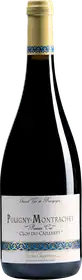
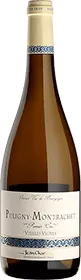
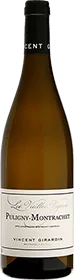
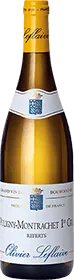
Jean Chartron, Olivier Leflaive, Henri Boillot, Joseph Drouhin, Louis Latour, Louis Jadot, Leroy, Vincent Girardin… So many names that have forged the legend of Puligny-Montrachet and made this Burgundian village an essential benchmark for great white wines. Explore in turn the breadth of our selection, boasting more than 25 carefully chosen producers, and discover all the diversity of an exceptional terroir.