Since 1910, the House of Mareuil-sur-Aÿ has placed pinot noir at the heart of its philosophy. Freshness, precision, and character: each cuvée is a faithful and distinctive expression of the Grande Vallée de la Marne.
Characterful cuvées driven by pinot noir
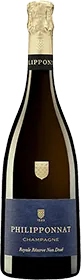
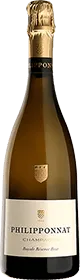
Royale Réserve: the gateway to the Philipponnat style
A blend of pinot noir, chardonnay, and pinot meunier, Royale Réserve is the gateway to the Philipponnat style. Its aromatic clarity and finely chiseled structure immediately reflect the house’s guiding vision. Bottled as a brut, this multi-vintage cuvée incorporates a generous proportion of reserve wines aged in oak. Consistency, notes of white fruit, and a saline finish shape a singular champagne.
Clos des Goisses: the expression of an exceptional terroir
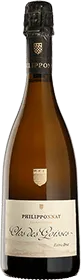
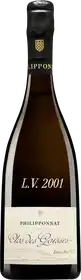
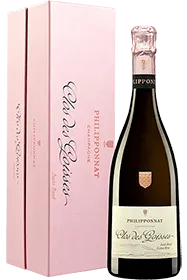
Born from a 5.83-hectare vineyard planted on a 45° slope with full southern exposure, Clos des Goisses is produced only in the finest years. The outcropping chalk and exceptional sunshine give the grapes a rare level of ripeness in Champagne.
The blend combines around 70% pinot noir with chardonnay, partially vinified in oak and bottled as extra-brut. Breadth, chalky character, and tension define a wine of remarkable longevity.
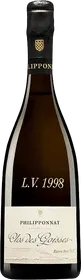
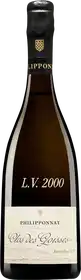
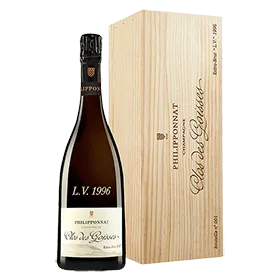
The range also includes a Clos des Goisses Juste Rosé and a Clos des Goisses Long Vieillissement.
Clos des Goisses ranks among the most sought-after single-vineyard champagnes in the world, regularly acclaimed by international critics. Its outstanding aging potential makes it both a collector’s wine and a gastronomic one.
Single-vineyard and prestige cuvées: the art of place
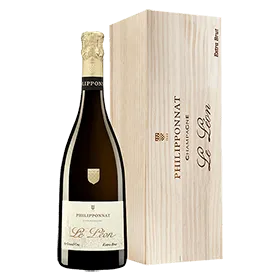
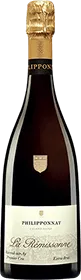
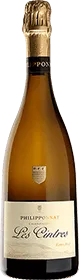
With La Rémissonne, Le Léon, Les Cintres, and the Cuvée Parcellaire Mareuil-sur-Aÿ, Philipponnat expresses its single-vineyard philosophy through four distinct interpretations, each tied to a historic lieu-dit of the estate. These confidential cuvées reflect a meticulous reading of the vineyard, where each parcel asserts its own typicity.
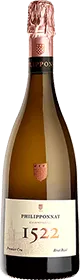
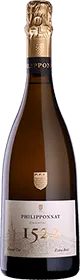
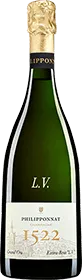
The 1522 cuvée, available as Grand Cru, Grand Cru Long Vieillissement, and 1er Cru Rosé, pays tribute to the year the family settled in Champagne. Crafted from the finest selections, it embodies the stylistic pinnacle of the house.
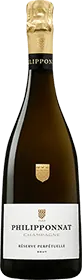
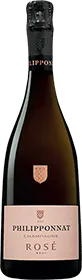
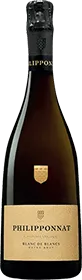
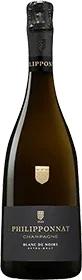
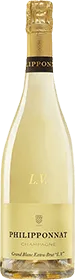
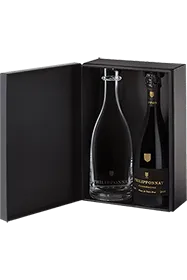
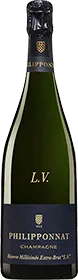
The range also revolves around Réserve Perpétuelle (Brut and Non Dosé), Réserve Millésimée L.V., a remarkable collection of Blancs de Blancs (Extra-Brut, Grand Blanc, Grand Blanc Long Vieillissement), a Blanc de Noirs accompanied by its elegant carafe gift set, as well as two exceptional rosés: Rosé Brut and Royale Réserve Rosé.
Five centuries at the heart of Champagne
Mareuil-sur-Aÿ, historical roots and the house’s headquarters
Nestled on the left bank of the Marne, between Aÿ and Épernay, the village of Mareuil-sur-Aÿ has housed Philipponnat’s headquarters since its founding. Its 18th-century cellars, carved into the chalk beneath the former château, form its historic core.
From Apvril Le Philipponnat to the founding of the house
The story begins in 1522, when Apvril Le Philipponnat, a captain in the service of François I, received land in Aÿ in recognition of his bravery at the Battle of Marignan. The family thus took root in the Champagne vineyard.
Under the Second Empire, the Philipponnat family devoted themselves fully to the production and trade of champagne. The decisive turning point came in 1910: Auguste and Pierre founded their company and acquired the historic cellars of Mareuil-sur-Aÿ, giving the family business a new commercial dimension.
Twenty-five years later, Pierre made the acquisition that would transform the destiny of the house: Clos des Goisses, a walled 5.83-hectare vineyard perched on the slopes overlooking the Marne.
Charles Philipponnat, architect of a demanding renewal
Since 2000, Charles Philipponnat has overseen the house’s direction. Grandson of Auguste and son of René (who devoted forty years of his career as cellar master at Moët & Chandon), he embodies the depth of a family legacy rooted in the art of Champagne.
Lower dosage levels, development of single-vineyard cuvées, extended aging: each decision under his leadership reflects a pursuit of authenticity. Maison Philipponnat has thus gained in rigor and precision, consistently serving the identity of its terroir.
Twenty hectares between chalk slopes and Grands Crus
A terroir of slopes and minerality
The vineyard lies at the heart of the Grande Vallée de la Marne, on slopes classified as Premiers and Grands Crus. Campanian chalk, omnipresent in the subsoil, ensures natural drainage and imparts the pronounced minerality that defines the Philipponnat signature.
At Clos des Goisses, the terroir reaches its most intense expression. The 45° slope offers a unique full southern exposure in Champagne. The word “Goisses” itself, derived from the old Champagne term “gois,” refers to a steep slope: the site carries its identity in its name.
Pure chalk surfaces in places and releases the heat accumulated during the day. This configuration produces grapes of uncommon concentration for the region, where solar power and mineral freshness interact in harmony.
Surface area and appellations at the heart of Champagne
The estate comprises twenty hectares of its own vineyards, spread across the communes of Aÿ, Avenay-Val-d'Or, Mareuil-sur-Aÿ, and Mutigny. These parcels, classified as Premiers and Grands Crus, form the backbone of the blends.
Additional sourcing from the Côte des Blancs, Vallée de la Marne, and Montagne de Reims broadens the palette and provides the diversity necessary for blending.
Pinot noir as the guiding thread
An emblematic grape variety, pinot noir is the cornerstone of the Philipponnat style. Dominant in most cuvées, it brings structure, vinosity, and the assertive character that distinguishes the house.
Chardonnay plays a complementary role, contributing finesse and brightness. Pinot meunier, present in certain blends, adds balance to multi-vintage cuvées through its fruity roundness.
Precision viticulture and respect for living systems
Work in the vineyard follows a parcel-based, thoughtful approach. Every other row is grassed over to regulate yields and stimulate the biological activity of the soils. Cordon de Royat pruning, practiced throughout the estate, ensures even ripening of the grapes.
At Clos des Goisses, the extreme slope requires entirely manual maintenance. Every intervention, from soil work to leaf thinning, demands heightened attention dictated by the topography.
All harvesting is carried out by hand, parcel by parcel, according to individually assessed ripeness levels. This rigor, attentive to natural rhythms, aims to preserve in each grape the imprint of its terroir.
Historic cellars serving uncompromising winemaking
From the moment the grapes arrive, a parcel-based logic governs every step. Pressing is carried out in small batches; only the first two press fractions are retained, ensuring purity and finesse.
At Philipponnat, part of the wines are aged in oak, with proportions carefully calibrated to enhance aromatic complexity without masking the fruit. Malolactic fermentation is systematically avoided, a bold choice that preserves natural acidity and gives the cuvées their characteristic tension.
In the historic cellars carved beneath the former château of Mareuil, the bottles rest for extended periods on lees, in the constant coolness of the chalk. Dosage, deliberately restrained, continues this commitment to revealing the purity of the terroir. Each Philipponnat cuvée bears the signature of winemaking in service of place, in all its rigor.