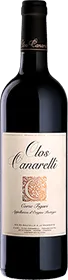
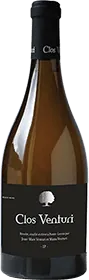
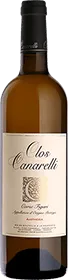
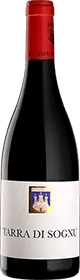
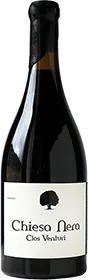
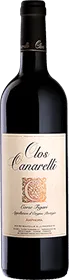
Even before the cultivation of vines was developed in Corsica, the practice of picking grapes in the wild was already deeply rooted in Corsican customs. Indeed, thanks to its sublime landscapes between land and sea, Corsica has always been blessed with a flourishing nature.
With the arrival of the Phocaeans on the Mediterranean coast, vines were swiftly planted everywhere and they truly started to flourish on the Isle of Beauty during ancient times. Unfortunately, the infamous phylloxera epidemic decimated almost the entire Corsican vineyard, drastically reducing its surface area.
Corsican wines were then revived thanks to the dedicated and passionate winegrowers who set about restructuring the entire vineyard. Combining modern know-how and age-old traditions, they succeeded in lovingly working their vines to offer a wide range of wines that are highly regarded by the finest connoisseurs.
These exclusive vintages have experienced a real rise thanks to the exportation of the wines to northern Italy and their use during religious ceremonies. Today, they have successfully broadened their reputation beyond the country’s borders.
The 450 producers of Corsican vineyards are spread over four main geological regions. The soils in the west are predominantly granitic, while the east benefits from numerous types of schist. In the northwest, limestone is king. Lastly, on the eastern coast, there is a large quantity of clay or silico-clay soils.
On these exceptional terroirs, numerous indigenous grape varieties peacefully thrive and exude a plethora of aromatic expressions. Among the most famous, one cannot overlook the Nielluciu varietal, which is none other than the twin of the famous Italian Sangiovese variety. The Sciaccarellu grapes are essentially used for the elaboration of red wines, even if the latter is also used to produce rosé wines. In order to offer fresh and pure white wines, Vermentinu is meticulously cultivated.
To preserve the quality and reputation of these wines, an appellation system has been introduced. Out of the 7,000 hectares of vines that make up the Corsican vineyard, 2,500 hectares are AOC, of which there are nine. In the same way as the classification system in Languedoc and in the Rhone Valley, the appellations are hierarchical according to the quality of the wines produced. Thus, poised at the top are the AOC Patrimonio and Ajaccio, then the "village" appellation includes wines from Corsica Porto-Vecchio, Corsica Figari, Corsica Sartène, Corsica Calvi and Corsica Coteaux du Cap Corse. Lastly, a separate appellation, Muscat du Cap Corse, includes natural sweet wines.
All these rugged and unique features help to define the identity of fine Corsican wines, that reflect the exceptional vintages that are coddled by thousand-year-old lands.