Assistant



 Guaranteed provenanceDirect from the estates
 DeliveryFree standard delivery over HK$5,000
 Secure PaymentVisa, American Express, Mastercard...
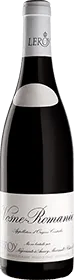
Leroy : Vosne-Romanée Village "Les Genaivrières" Domaine 2006
Only 1 available
In-Stock
Let's talk about this product!
A pairing in mind? A question about the vintage? Comparison with another product? Find the answers here...
Description
Characteristics and tasting notes for the Vosne-Romanée Village "Les Genaivrières" Domaine 2006 by Leroy
Tasting
Colour
The wine shows a red hue characteristic of Burgundian Pinot Noir.
Nose
The nose reveals a complex, elegant bouquet with aromas of strawberry and raspberry alongside notes of blackberry. Spicy nuances add depth, while tertiary touches of mossy undergrowth bear witness to the wine's evolution and the mineral influence of the terroir.
Palate
On the palate, this wine charms with its velvety texture and distinction. It is silky, carried by fine, seamlessly integrated tannins. Morello cherry flavours bring remarkable precision, while the balance between fruit, acidity and tannic structure gives the whole a restrained harmony. The finish hints at great complexity to come, with an elegance and vibrancy characteristic of the finest successes of the vintage.
Food and wine pairing
This Vosne-Romanée Village "Les Genaivrières" Domaine Leroy 2006 is an ideal match for feathered game such as pheasant or pigeon, roasted or braised and served with mushroom sauces. It also pairs perfectly with duck dishes, notably duck with turnips or duck confit. Beef dishes in sauce, such as bœuf bourguignon or tournedos with mushrooms, also make excellent pairings. When it comes to cheese, opt for soft bloomy-rind varieties such as Camembert or characterful Burgundian cheeses such as Époisses.
Serving
This Vosne-Romanée Village "Les Genaivrières" Domaine Leroy 2006 is best served at a temperature between 15 and 16°C.
An exceptional Vosne-Romanée from Domaine Leroy, a refined expression of Burgundian biodynamics
The estate
In 1868, François Leroy, who owned vineyards in Auxey-Duresses and Musigny among other places, founded the Leroy négociant house. His son Joseph and, a few years later, his grandson Henri gradually expanded the business, notably by creating a branch dedicated to producing liqueurs and eaux-de-vie. In 1942, Henri Leroy acquired half of the prestigious Romanée-Conti estate. Following his death, his younger daughter Lalou Bize-Leroy joined Domaine Leroy in 1955, and between 1974 and 1992 she served as co-manager of Domaine de la Romanée-Conti alongside Aubert de Villaine.
The vineyard
This Vosne-Romanée Village "Les Genaivrières" comes from a plot of around 1.23 hectares in the village of the same name, in the heart of the Côte de Nuits. The name "Genaivrières" refers to the juniper bushes that historically grew on this terroir. The vines enjoy an east-facing exposure on gentle slopes and are planted on the stony Jurassic limestone soils characteristic of the appellation. These geological and topographical conditions favour minerality and balanced ripeness in the Pinot Noir. The vineyard is farmed biodynamically, with no chemical inputs, and the vines have not been trimmed since 1999, allowing them to reach their full potential and yield grapes of exceptional concentration.
The vintage
The 2006 vintage proved demanding for Burgundian winegrowers. A cool, damp spring encouraged the spread of downy mildew, and a heatwave in July was followed by a return to cooler temperatures and rainfall in August and September. These contrasting weather conditions slowed the ripening of the grapes and called for constant vigilance against fungal disease. Only the most meticulous producers, who sorted rigorously and drastically limited their yields, managed to make concentrated, balanced red wines. That year, the white wines generally fared better than the reds, benefiting from the freshness of the vintage.
Vinification and ageing
The grapes for the Vosne-Romanée Village "Les Genaivrières" Domaine 2006 are hand-sorted with extreme rigour, often under refrigerated conditions. They are then transferred, without destemming or crushing, into large wooden vats, preserving the indigenous yeasts naturally present on the skins. Fermentation relies solely on these natural yeasts and is accompanied by pumping over and punching down, with extended macerations at temperatures of up to 33°C to extract as much of the aromatic and structural compounds as possible. After fermentation and natural malolactic conversion, the wine is moved to cooler cellars for ageing. It is bottled without fining or filtration, preserving its integrity and complexity.
Grape variety
100% Pinot Noir