Assistant



 Guaranteed provenanceDirect from the estates
 DeliveryFree standard delivery over HK$5,000
 Secure PaymentVisa, American Express, Mastercard...

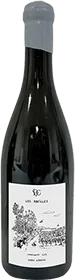
Pierre Girardin : Griotte-Chambertin Grand cru 2019
Only 1 available
In-Stock
Let's talk about this product!
A pairing in mind? A question about the vintage? Comparison with another product? Find the answers here...
Description
Characteristics and Tasting Notes of the Griotte-Chambertin Grand Cru 2019 from Pierre Girardin
Tasting Notes
Appearance
The colour reveals a deep, intense ruby red hue, with garnet reflections at the rim of the glass.
Nose
The nose reveals a complex bouquet dominated by ripe red fruit, particularly black cherry and raspberry. Elegant oaky notes of cedar and vanilla intertwine with subtle floral and humus touches, evoking damp earth and undergrowth. With aeration, nuances of truffle and game gradually emerge.
Palate
On the palate, the wine offers a velvety texture that caresses the palate with elegance. Concentrated flavours of juicy red fruit, dominated by black cherry and blackberry, unfold generously. The tannic structure, present yet silky, shows no roughness whatsoever. Beautiful complexity reveals itself throughout the tasting, with spicy notes and a crystalline mineral touch characteristic of limestone terroirs. The finish is long and persistent, leaving a thoroughly satisfying impression that combines fruity intensity with structural complexity.
Food and Wine Pairings
This Griotte-Chambertin Grand Cru 2019 pairs perfectly with feathered game meats such as roast duck, goose or duck salmis. It also pairs excellently with roasted lamb dishes in sauce, beef bourguignon or beef ribs. Soft, washed-rind cheeses such as Époisses or Bergues, as well as aged alpine cheeses, make excellent cheese pairings. Wild mushroom dishes, particularly tarts or morel sauces, also create a beautiful harmony with this wine.
Serving and Cellaring
The Griotte-Chambertin Grand Cru 2019 is best enjoyed at a temperature between 16 and 18°C. Opening the bottle 30 to 45 minutes before serving, or decanting it, will allow the wine to fully reveal its aromatic complexity. This wine has an ageing potential of around 15 to 25 years, with the capacity to evolve for up to 40 years under optimal storage conditions. It should be kept at a stable temperature (10-14°C), away from light, lying down.
A Gevrey-Chambertin Grand Cru from a Rising Star of Burgundy
The Estate
Founded in 2016 by Pierre-Vincent Girardin, Domaine Pierre Girardin represents the thirteenth generation of a winegrowing family established in Burgundy for over two centuries. Based in Meursault in the Champs Lins area, this young producer released his first vintage in 2017. Pierre Girardin is now the owner and oversees all of the estate's viticultural and winemaking operations. He manages around 7.3 hectares across Burgundy, including plots inherited from his father Vincent as well as vines under long-term contracts. In 2018, the estate built an ultra-modern cellar in Meursault, reflecting this winemaker's ambition and quality-driven vision. Quickly recognised by international critics as one of Burgundy's most promising talents, Pierre Girardin practises organic and biodynamic viticulture, favouring a minimalist approach in the cellar to let the purity of the terroirs shine through.
The Vineyard
Griotte-Chambertin is one of the nine Grands Crus of the commune of Gevrey-Chambertin, in the Côte de Nuits. This vineyard, covering approximately 2.64 hectares, occupies a distinctive geographical position immediately south of Chapelle-Chambertin, entirely surrounded by other Grand Cru plots. The name "Griotte" refers to the word "Criots", derived from "craie" (chalk), reflecting the limestone nature of the subsoil. The plot forms a basin-like shape on the slope, with remarkably shallow soils, sometimes no more than 30 centimetres deep. The soil composition reveals poor, stony ground, reddish-brown in colour at depth and lighter towards the boundary with Chapelle-Chambertin. The bedrock, highly compact and often outcropping, consists of friable Bajocian limestone, rich in fossils and pebbles, providing exceptional drainage. The vineyard faces east, on a mid-slope position, creating ideal conditions for growing Pinot Noir. This combination of thin soils, limestone geology and a distinctive microclimate produces wines of exceptional complexity and great ageing potential.
The Vintage
The 2019 vintage is widely regarded as one of the finest for Burgundy red wines of the new millennium. The growing season was marked by exceptional heat and drought, with temperatures significantly above historical averages and rainfall well below normal for most of the ripening period. These conditions initially raised concerns, recalling certain hot vintages of the past. However, cool nights in August and September helped preserve the grapes' acidity despite the overall heat, while late-season winds encouraged physiological ripeness without excessive sugar accumulation. The best producers harvested with remarkable precision, understanding that in hot years, the difference between optimal ripeness and over-ripeness is measured in days rather than weeks. The 2019 vintage demonstrates just how much contemporary Burgundy has improved its ability to manage hot vintage conditions, combining fruity richness with the structural finesse characteristic of great Burgundian wines.
Winemaking and Ageing
The grapes for the Griotte-Chambertin Grand Cru 2019 were hand-harvested into perforated crates at the optimal moment of balance between phenolic ripeness and acidity preservation. After rigorous sorting, the bunches were fermented as whole clusters in small stainless steel tanks fitted with floating caps, allowing precise temperature control. Fermentation took place with indigenous yeasts at low temperature. Extraction was deliberately minimal, favouring pump-overs over punching down, in keeping with Pierre Girardin's gentle-intervention philosophy. Maceration continued for two to three weeks. Pressing, particularly long and gradual at around three hours, allowed the dry compounds to be extracted without tannic harshness. The wine was then aged in French oak barrels for 11 to 12 months, with 35 to 50% new wood. Cellar temperatures were deliberately kept cool to limit oxidation. After barrel ageing, the wine was transferred to stainless steel tanks to rest for a few months before bottling. The wine was bottled without fining or filtration, following a biodynamic lunar calendar.
Grape Variety
100% Pinot Noir