Assistant



 Guaranteed provenanceDirect from the estates
 DeliveryFree standard delivery over HK$5,000
 Secure PaymentVisa, American Express, Mastercard...

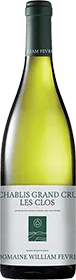
William Fèvre : Chablis Grand cru "Les Clos" Domaine 2020

Out of stock
Would you wish to know when this product is back in stock?
Let's talk about this product!
A pairing in mind? A question about the vintage? Comparison with another product? Find the answers here...
Description
Tasting characteristics and advice for William Fèvre Chablis Grand Cru “Les Clos” Domaine 2020
Tasting
Appearance
The wine shows a bright golden-yellow hue, lifted by pale green highlights visible at the rim of the glass.
Nose
The bouquet initially reveals itself with restraint, requiring a touch of aeration to fully unfold its complexity. It then expresses citrus aromas (lemon, grapefruit), alongside acacia floral notes and herbal touches of green apple. A subtle minerality characteristic of the terroir completes the ensemble.
Palate
The palate impresses with its power and concentration while maintaining remarkable elegance. The attack is generous and silky, structured by vibrant acidity that brings tension and definition. Flavors of candied citrus, fresh bread crust and orange zest mingle with an iodine-tinged salinity reminiscent of oyster shell. The finish lingers at length on an intense saline minerality.
Food and wine pairings
This Chablis Grand Cru is an ideal match for seafood, especially oysters, which create a perfect harmony with its saline minerality. It also elevates fine fish such as turbot or sole, shellfish like lobster or langoustines, as well as sushi and sashimi preparations. Aged cheeses such as Comté also make an excellent pairing.
Serving and cellaring
William Fèvre Chablis Grand Cru “Les Clos” Domaine 2020 is ideally served between 10 and 14°C. Decanting for around thirty minutes helps optimize aromatic expression. This wine can be enjoyed now through around 2026 for accessible drinking, but also offers cellaring potential extending to around 2040 under optimal storage conditions.
A Chablis Grand Cru combining power and Burgundian minerality
The estate
Domaine William Fèvre, officially founded in 1959, represents the culmination of more than 250 years of the Fèvre family’s presence in the Chablis region of Burgundy. Since 1998, the estate belonged to the Henriot family, then was acquired in January 2024 by Domaines Barons de Rothschild Lafite. Under the direction of Didier Séguier since 1998, the estate spans around 78 hectares, including 15.2 hectares of Grands Crus, making William Fèvre the largest owner of Chablis Grands Crus. A pioneer in sustainable viticulture, the estate was the first in Chablis to obtain Haute Valeur Environnementale certification in 2014 and continues its conversion to organic and biodynamic farming.
The vineyard
Chablis Grand Cru Les Clos comes from the most famous and largest climat among the seven Grands Crus of the appellation. Domaine William Fèvre’s parcels in Les Clos total 4.11 hectares, mainly located on the upper parts of the hillside where the soils are high in limestone. The vineyard benefits from an optimal south-southwest exposure on steep slopes. The terroir rests on the renowned Kimmeridgian soil, made up of clay-limestone marls rich in oyster fossils dating back more than 150 million years, giving the wines their hallmark minerality. Around half of the vines were planted in the 1940s and 1950s, offering deep roots that draw from mineral subsoils.
The vintage
The 2020 vintage was marked by exceptionally warm climatic conditions. After a winter without significant frost and an early spring characterized by intense sunshine and drought, the growing season progressed vigorously. Mid-summer brought high temperatures and water stress, requiring precise management of picking dates. The estate teams carried out daily ripeness analyses across the five parcels to determine the optimal harvest moment, preserving essential acidity despite the heat. September conditions ultimately made it possible to reach ideal phenolic ripeness in sunny weather.
Winemaking and aging
William Fèvre Chablis Grand Cru “Les Clos” Domaine 2020 was crafted using a minimalist approach that respects the terroir. After gentle pneumatic pressing lasting one to two hours, the musts underwent light settling before spontaneous fermentation with indigenous yeasts, with no temperature control or nutritional additions. Aging took place for around eighteen months on fine lees in used French oak barrels averaging six years of age, without intensive bâtonnage. This approach develops complexity while preserving fruit purity and mineral expression. Bottling took place in March 2022 after light filtration.
Grape variety
100% Chardonnay