Assistant



 Guaranteed provenanceDirect from the estates
 DeliveryFree standard delivery over HK$5,000
 Secure PaymentVisa, American Express, Mastercard...
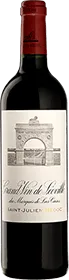
Château Léoville Las Cases 1998
Stock currently at the producing estate – Will ship after 14 October 2026
Let's talk about this product!
A pairing in mind? A question about the vintage? Comparison with another product? Find the answers here...
Description
Tasting Notes and Serving Tips for Château Léoville Las Cases 1998
Tasting
Color
The wine displays a deep, opaque blue-black hue, lifted by violet highlights that attest to its remarkable concentration.
Nose
The nose gradually opens onto a complex bouquet dominated by intense aromas of blackcurrant and blackberry, accompanied by elegant notes of smoky oak and Havana cigar. With aeration, the wine reveals nuances of cedar, cigar box, graphite and slate, enriched by touches of blond tobacco, licorice and minerality. Herbal notes of rosemary and a hint of menthol round out this sophisticated aromatic palette.
Palate
On the palate, the wine stands out for its precision and structural elegance. A medium-bodied attack leads into a well-balanced palate, revealing impressive concentration and remarkable purity. The tannins are firm and finely crafted, offering a robust yet silky framework. The wine’s dense, precise texture gradually unfolds, unveiling flavors of dark fruit that meld seamlessly with oaky nuances. The exceptionally persistent finish lingers at length, offering a lovely tangy freshness that frames the fruit, with touches of graphite and minerality.
Food and Wine Pairing
This wine pairs perfectly with game in all its forms, notably venison, wild boar or roe deer prepared with a rich brown sauce. Grilled red meats such as ribeye or bone-in beef rib also make excellent companions. Braised meats and long-simmered stews create a remarkable harmony with the wine’s complexity. Aged hard cheeses such as Comté or mountain Gruyère pair elegantly with its tannic structure. For lovers of bold pairings, this wine can be a pleasant surprise with dark chocolate or coffee-based desserts.
Serving and Cellaring
Château Léoville Las Cases 1998 can be enjoyed until around 2041. For optimal tasting in the near term, significant aeration is recommended, ideally through double decanting. The wine will reach its peak between 2015 and 2025, though it retains excellent aging potential beyond that period.
The elegance and aromatic expression of a Saint-Julien Second Growth
The estate
Created between 1826 and 1840 during the division of the Léoville estate, Château Léoville Las Cases is a Bordeaux Second Growth classified in 1855, located in Saint-Julien-Beychevelle in the Médoc. The vineyard spans 98 hectares, including the famed 50-hectare Grand Clos enclosed by walls. Managed by Domaines Delon, the estate is now owned by Jean-Hubert Delon. Its style is based on a high proportion of cabernet sauvignon, combined with cabernet franc and merlot, for wines built to age.
The vineyard
The Château Léoville Las Cases vineyard enjoys a privileged position at the heart of the Saint-Julien appellation. The soils are highly complex, primarily made up of Quaternary gravel over sandy, clay and gravelly-sandy subsoils providing perfect drainage. The average vine age exceeds forty years, with some cabernet franc parcels approaching ninety years.
The vintage
The year 1998 was marked by early budbreak and flowering, advancing the vine’s phenological cycle. August proved particularly hot and dry, creating ideal conditions for grape ripening. A few rains in September during harvest did not disrupt the berries’ good ripeness. This combination of favorable weather conditions allowed the grapes to reach optimal, even maturity, ensuring excellent extraction of aromatic and tannic compounds. Late flowering, combined with summer heat, encouraged slow, balanced ripening, enabling the full development of aromatic complexity.
Winemaking and aging
Château Léoville Las Cases 1998 was vinified in stainless-steel, wooden and cement vats, with fermentations lasting six to eight days followed by extended maceration of twelve to twenty-eight days. Malolactic fermentation was carried out by co-inoculation during the main fermentation process. Aging took place over eighteen to twenty months in French oak barrels, with about 90% new oak and 10% one-year-old barrels.
Grape varieties
Cabernet sauvignon (76 %)
Merlot (15 %)
Cabernet franc (9 %)