David Léclapart in Trépail: a Premier Cru of Chardonnay, biodynamic since 1996
A Chardonnay village in Pinot Noir country
Trépail stands out as an exception in the Montagne de Reims. While the massif is best known for its Pinot Noirs throughout Champagne, here Chardonnay covers most of the slopes. The village, classified Premier Cru, sits a little higher than its neighbours, in a forest-fringed basin where the climate remains cool and humid. David Léclapart farms around three hectares here, split into some twenty plots and planted mostly with Chardonnay, the remainder with Pinot Noir. Chalk, altitude and coolness explain the tension and saline finish of his wines.
A conversion begun in 1996
When his father died in 1996, David Léclapart took over the family estate and immediately converted it to biodynamics, among the first growers in Champagne to do so. The soils are grassed over, no synthetic products enter the vines, and sheep have grazed there since 2002. Long Demeter-certified, the estate joined Biodyvin in 2020 and is one of the benchmarks in the selection of organic champagnes.
A family affair
His wife Carole Léclapart manages the estate, and their son Martin has worked in the vineyard and cellar since 2020. Production is at most around 15,000 bottles a year, spread across five champagnes and a few still wines.
Reserve wine, casks, dosage: a remarkably precise winemaking approach
No reserve wine
Each of David Léclapart's champagnes comes from a single harvest. The estate keeps no reserve wine, whereas most houses blend it in to smooth out differences between vintages. This is a deliberate choice. Each bottle reflects its season, which is why two vintages of the same cuvée can differ markedly.
Leflaive casks, never stainless steel
Fermentations start with indigenous yeasts, in just two types of vessel. L'Amateur and half of L'Artiste ferment in enamelled tanks; the other wines go into old casks from Domaine Leflaive in Puligny-Montrachet, without imparting any oaky flavour to the wine. Stainless steel, for its part, never enters the cellar: according to his distributors, the winegrower considers it detrimental to the energy of the wine.
No dosage
No cuvée receives a dosage liqueur, the blend of wine and sugar added at disgorgement that softens the acidity of most champagnes. The balance therefore rests on the ripeness of the grapes alone, which places the entire range among the Brut Nature champagnes.
L'Amateur, L'Artiste, L'Apôtre, L'Astre, L'Aphrodisiaque: choosing from the range
Five names beginning with A
Every cuvée of the estate bears a name starting with A, the first letter of the alphabet, to mark the fresh start made with the first bottles signed by David Léclapart. Three are Blanc de Blancs, one is a Blanc de Noirs, and only one blends the two grape varieties.
L'Amateur, to discover the estate
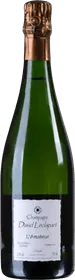
L'Amateur Blanc de Blancs is the entry level of the range: a pure Chardonnay from several plots in Trépail, fermented without oak. It is the most direct cuvée, lemony and chalky, and the quickest to open. Two vintages three years apart, 2019 and 2022, make it possible to follow its evolution.
L'Artiste, a step up in substance
L'Artiste Blanc de Blancs comes from vines thirty to fifty years old, half of it vinified in cask. The old vines and the oak give it more breadth than L'Amateur, without taking anything away from its salinity. It is the estate's Blanc de Blancs best suited to the dinner table.
L'Apôtre, the grandfather's plot
L'Apôtre Blanc de Blancs comes from a single plot, planted in 1946 by David Léclapart's grandfather, and ferments entirely in cask. It is the most generous and longest Blanc de Blancs in the range. With 2013 and 2020, the selection offers two vintages seven years apart.
L'Astre, Pinot Noir alone
L'Astre Blanc de Noirs is the estate's only champagne made from 100% Pinot Noir, aged in old casks and bottled in clear glass. As Pinot Noir accounts for only a small share of the vineyard, it is also one of the most confidential cuvées. Fuller than the three Blanc de Blancs, it appeals first and foremost to lovers of Pinot Noir.
L'Aphrodisiaque, both grape varieties united
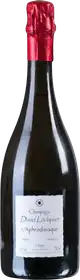
L'Aphrodisiaque is the only blend in the range: Chardonnay and Pinot Noir, vinified in cask. The cuvée was born of a difficult year, when the harvest was not sufficient to produce each wine separately.
Drink young or wait: ageing and aeration of Léclapart champagnes
L'Amateur, to drink young
L'Amateur is the cuvée to open first. With neither oak nor dosage, it reveals its fruit earlier than the others, and the recent vintages in the selection are already ready to enjoy.
L'Apôtre and L'Astre, to wait for and aerate
L'Apôtre and L'Astre, fermented in cask and born of old vines, tend to be closed in their early years. The estate's distributors recommend aerating them, even decanting them, when young; a few years in the cellar bring them the complexity they lack at the outset.