Nathalie Falmet: 3.40 hectares in the Aube, an oenologist at the helm and cuvées named after land registry numbers
A Côte des Bar estate on Kimmeridgian soils
Domaine Nathalie Falmet farms 3.40 hectares in Rouvres-les-Vignes, near Bar-sur-Aube. The village lies in the Côte des Bar, in the south of Champagne. The vines grow on clay-limestone soils of the Upper Kimmeridgian, the same geological stage found beneath the vines of Chablis. The estate's technical sheets name two lieux-dits, Val Cornet and Val Dron. Farmed according to sustainable principles, the vineyard has held High Environmental Value certification since June 2021.
Chemist and oenologist before becoming a winegrower
Nathalie Falmet studied chemistry at Paris XI University, then earned her oenology degree in Reims in 1993, before taking over the family estate. She has practised both professions simultaneously ever since. The estate itself lists the variables it changes from one cuvée to the next: soil, grape variety, vinification technique and vintage. Her definition of typicity fits in a single sentence, attributed to the winegrower: the combination of "a soil, a microclimate, a plant and a man".
Cuvées named after a plot number
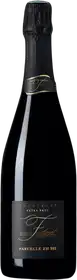
The estate's three rarest cuvées do not carry fanciful names. They take the cadastral reference of their micro-plot: ZH 302, ZH 303 and ZH 318. Each comes from vines planted some fifty years ago, from a single grape variety and a single harvest. This focus on the plot extends to almost the entire range.
From Brut to the ZH plots: choosing among Nathalie Falmet champagnes
Brut, the only cuvée blended with reserve wines
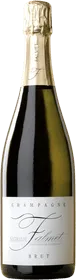
The Brut by Nathalie Falmet is the entry point to the range and the only cuvée at the estate that includes reserve wines. The pinot noir and chardonnay from Val Cornet and Val Dron are complemented by a portion of the house's perpetual reserve. The whole is vinified in stainless steel tanks and dosed at 4 to 5 g/l. Taut and mineral, it pairs as well with an apéritif as with seafood.
Pinot noir without dosage or rosé: three cuvées from a single harvest
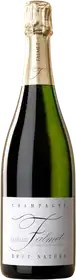
Brut Nature is a pure pinot noir from a single Val Cornet plot and a single harvest, vinified in stainless steel and dosed at 0 g/l. The estate intends it to show what pinot noir draws from Kimmeridgian soil. It is also the most accessible of the house's brut nature champagnes.
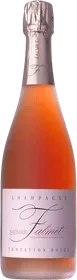
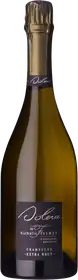
The two rosés rely on distinct methods. Tentation Rosée is a saignée rosé, made from equal parts pinot noir and meunier and dosed at 5 g/l. L'Oeil de Perdrix comes from a short maceration of pinot noir alone, which gives it an orange-pink hue.
Le Val Cornet and Solera: vintage versus memory
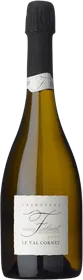
Le Val Cornet is a blanc de noirs from a single plot planted fifty years ago, made from equal parts pinot noir and meunier. It is vinified half in stainless steel and half in 350-litre barrels, then dosed at 4 g/l. It is the first cuvée in the range to see wood.
Solera takes the opposite path. It draws on a perpetual reserve of pinot noir and chardonnay in equal parts. According to the estate, this reserve brings together several harvests. The cuvée is released with no dosage. Where Le Val Cornet captures a single year, Solera layers several.
The three ZH plots, one grape variety each
The ZH cuvées sit at the top of the range: one Champagne grape variety per plot, vinification entirely in 350-litre barrels, and no dosage. Parcelle ZH 302 is a pure meunier from the 2012 harvest, with a finish reminiscent of walnut. Parcelle ZH 303 is a pure chardonnay from 2014, chalky and saline, aged 50 months on the lees.
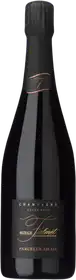
Parcelle ZH 318 completes the trio with a 2014 pinot noir. Opened side by side, the three cuvées show how three grape varieties express a single subsoil. Their place in the range comes down to the small volume of a micro-plot, the barrel and this long time in the cellar.
Stainless steel, 350-litre barrel, amphora: what the vessel and the dosage change in the glass
Stainless steel for fruit-driven cuvées
Brut, Brut Nature, Tentation Rosée, L'Oeil de Perdrix and Solera are vinified in temperature-controlled stainless steel tanks. Stainless steel contributes neither oxygen nor aroma. Grape variety, plot and harvest therefore keep the leading role, and the freshness of the Kimmeridgian passes intact into the bottle.
350-litre barrels rather than the Champagne pièce
For Le Val Cornet (half) and the three ZH cuvées (entirely), the estate chooses 350-litre barrels. They are larger than the traditional 205-litre Champagne pièce. The larger the vessel, the smaller the surface of wood in contact with the wine. Gault&Millau notes this regarding Parcelle ZH 318: the ageing lends brilliance to the texture without leaving any oaky taste.
Terra, the chardonnay from the clay jar
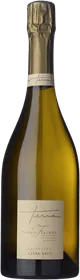
Terra is the estate's blanc de blancs, vinified in a terracotta jar from the chardonnays of plot ZH 303. According to the estate, terracotta allows slow micro-oxygenation. The permanent movement of the lees in the jar, which the winegrower links to Brownian motion, adds complexity. For the 2021 harvest, only eight hectolitres were vinified this way, then dosed at 1 g/l. This dosage places Terra among the extra brut champagnes.
From zero to 5 grams: one dosage per cuvée
The dosage remains low across the range. It is zero for Brut Nature, Solera and the three ZH cuvées. It reaches 4 g/l for Le Val Cornet, 4 to 5 g/l for Brut and L'Oeil de Perdrix, and 5 g/l for Tentation Rosée. For an enthusiast accustomed to classic bruts, the Brut and the two rosés provide a smooth transition. The non-dosed cuvées are best enjoyed at the table.