Assistant


 Guaranteed provenanceDirect from the estates

 DeliveryFree standard delivery over HK$5,000
 Secure PaymentVisa, American Express, Mastercard...
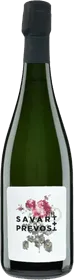
Savart : Bulle de Rosé Premier Cru Extra Brut
In-Stock
Let's talk about this product!
A pairing in mind? A question about the vintage? Comparison with another product? Find the answers here...
Description
Characteristics and Tasting Tips for Bulle de Rosé Premier Cru Extra Brut by Savart
Tasting
Colour
The colour is a delicate, luminous shade ranging from salmon to pale pink. It is enlivened by fine, steady bubbles.
Nose
The nose opens on small red fruits (raspberry, wild strawberry, redcurrant), lifted by citrus zest such as lemon and blood orange. It is rounded out by notes of dried fruits (almond, hazelnut), dried flowers, rose and dried herbs. Touches of sweet spice, such as cinnamon, are added. A mineral undertone evokes slate, crushed stone and chalk.
Palate
On the palate, this rosé is vinous and well structured. The attack is lively, driven by ripe red fruit that brings roundness without heaviness. The tension is pronounced, threaded with saline veins that prolong the sensation of freshness. The long, saline finish comes with a light tannic grip and a fine bitterness.
Food and Wine Pairing
Designed for the table more than for the aperitif alone, this rosé champagne pairs well with salmon or with roast chicken with cranberries. More broadly, it suits oily fish, roast poultry served with fruity accompaniments, and dishes with notes of red fruits or citrus.
Serving and Cellaring
Bulle de Rosé Premier Cru Extra Brut NM is served chilled, but not excessively cold. It can be treated like a structured white wine at the table, allowing it a few minutes in the glass to open up.
A Dry, Vinous Premier Cru Rosé Champagne from Écueil, Crafted by Champagne Savart
The Estate
Savart is based in Écueil, a Premier Cru village on the Petite Montagne de Reims, in Champagne. This family story begins with René Savart, who acquired the estate's first vines. His grandson Frédéric Savart is today its owner and manager. As a récoltant-manipulant, the estate cultivates a family-sized vineyard, dominated by Pinot Noir. Describing itself as a "terroir laboratory", it practises parcel-by-parcel vinification and favours very low dosages. Its grower champagnes, produced in limited quantities, are highly sought after.
The Vineyard
This rosé champagne comes mainly from Écueil, a Premier Cru village on the Petite Montagne de Reims, on slopes historically well suited to Pinot Noir. The climate there is semi-continental, with rather cool temperatures that preserve the acidity of the grapes. The plots rest on soils of chalk, sand and clay, which drain well and are the source of the wines' tension and minerality. This Champagne estate maintains old Pinot Noir vines planted from massal selection, the "pinot fin d'Écueil". Vineyard management is preventive and seeks to preserve a living ecosystem, with soil work adapted to each plot.
The Blend
This rosé champagne is non-vintage: it is the result of blending several harvest years. This method allows the winemaker to adjust the composition according to the available base wines, while building a house style. The proportions therefore vary slightly from one bottling to the next.
Vinification and Ageing
For this champagne, the base wines are vinified in stainless steel tanks and in old oak barrels. Part of the Pinot Noir is vinified separately as a red wine, then added to the final blend to give the champagne its colour. Malolactic fermentation is partial. The dosage is Extra Brut in style.
Grape Varieties
Predominantly Pinot Noir, Chardonnay and a small proportion of Pinot Noir red wine for colour. The proportions vary slightly from one bottling to the next.